
Harnessing Emerging Technologies for Responsible, Gender-Inclusive, and Sustainable Futures
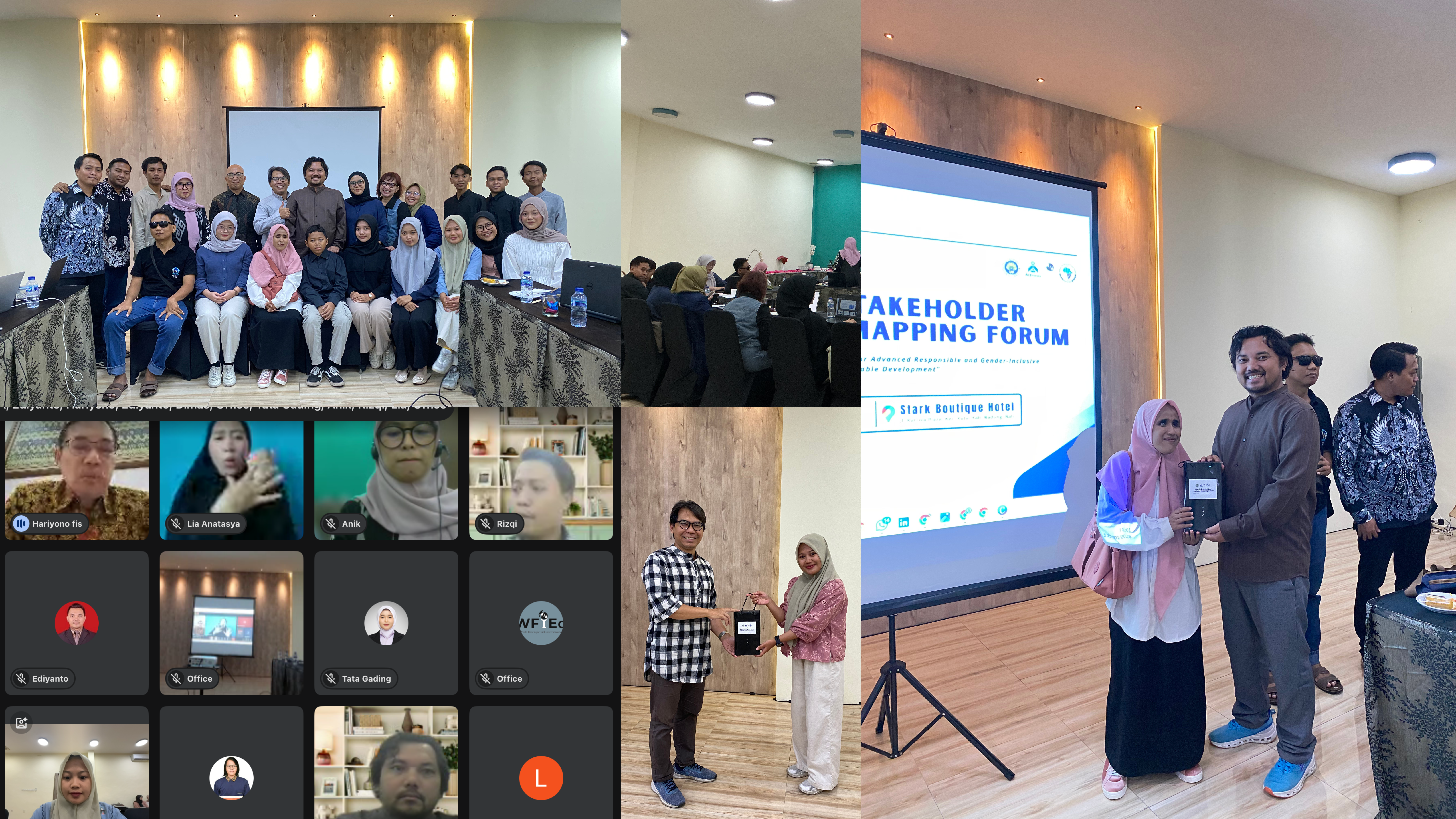
Bali, January 2026 — A strategic forum entitled “Harnessing Emerging Technologies for Responsible, Gender-Inclusive, and Sustainable Futures” was held on 17–18 January 2026 in Bali as a Multi-Stakeholder Strategic Mapping Forum, bringing together cross-sector stakeholders. The forum was collaboratively organized by RICE Universitas Negeri Malang (UM), the World Forum for Inclusive Education (WFIEd), ACENESIA, and the ATPS Network.
The forum was designed to map the development and impacts of emerging technologies, including Artificial Intelligence (AI), biotechnology, and digital platforms, on sustainable development and gender inclusion. Beyond focusing solely on technological advancement, the forum emphasized the importance of social impact, governance, ethics, and policy coherence—covering both high-tech innovations and low-cost, context-based technological solutions that are relevant to community needs.
The activities were conducted through keynote presentations, structured discussions, and response sessions to encourage open dialogue and experiential knowledge exchange across sectors and regions. The forum was initiated in response to the increasing adoption of technologies that may reinforce gender bias and social inequality if not accompanied by impact mapping and inclusive policy frameworks.
The forum featured representatives from the Coordinating Ministry for Human Development and Cultural Affairs (Kemenko PMK). From the private sector and corporate social responsibility domain, PT ACENESIA Ltd participated, while the academic sector was represented by Universitas Negeri Malang and Universitas Yudharta Pasuruan.
Community engagement was a key element of the forum. Disability communities such as PERTUNI Bali and the Bali Deaf Community, along with the RICE Education Center of Universitas Negeri Malang, were actively involved to ensure that the voices of technology users—particularly vulnerable groups—were incorporated into the mapping process and the formulation of recommendations.
1. Orange Technology: Challenges and Opportunities
One of the main speakers, Ms. Anik Nur Handayani, presented on the topic “Challenges and Opportunities of Orange Technology.” Orange Technology is understood as a technological approach that emphasizes warmth, care, health, and human happiness, and is closely related to assistive technology and inclusive education.
Ms. Anik explained that the scope of Orange Technology includes several key models:
• Health Model, referring to technological systems that assist medical professionals in analyzing health conditions while ensuring that final decisions remain with doctors.
• Happiness Model, which focuses on user well-being and positive user experiences.
• OCW Model, which emphasizes the development of warm and caring systems that do not always require formal validation, similar to play-based and learning-oriented approaches in early childhood education.
In her presentation, Ms. Anik also shared her experience in developing Mobile Braille Touch, an assistive technology innovation initiated in 2011 to support learning for persons with visual impairments. Further details on her research and assistive technology development can be accessed through her scientific publications on Google Scholar (Anik Nur Handayani).
2. Gender Bias in Artificial Intelligence
The following speaker, Mr. Lukman, addressed the issue of “Gender Bias in Artificial Intelligence and Strategies for Prevention.” He raised a fundamental question: Is AI truly neutral, or does it reproduce existing gender biases within society?
According to him, AI is inherently not neutral, but rather functions as a mirror that reflects existing social data and patterns. Gender bias in AI emerges because systems learn from data and subsequently identify and replicate those patterns. Two primary sources of AI bias are text-based data and image and video data.
Examples presented included bias in automated translation systems that associate doctors with men and nurses with women, as well as facial recognition systems that frequently fail to accurately identify dark-skinned women. Such biases also affect AI-based recruitment practices and credit scoring systems in the financial sector, potentially disadvantaging women.
To mitigate gender bias, the discussion emphasized the importance of regular algorithm audits, data balancing techniques, and cross-disciplinary collaboration involving computer science, social sciences, public policy, and ethics. The session also highlighted the declining participation of women in computer science since the mid-20th century, despite the rapid growth of AI technologies.
Innovation Presentations by ACENESIA Internship Team
The forum also featured technology innovation presentations by ACENESIA internship students.
Dani presented the Mango Application, a digital tool for the early identification of dyslexia symptoms. The application is designed to support parents and educators through tiered assessments, ranging from basic letter recognition to more advanced stages. Its consistent module design enables ease of navigation between assessments. The application has reached a functional stage and is planned for further development with automation features.
Fahmi presented the development of a Hand Gesture Recognition System, a real-time computer vision-based hand gesture recognition system. The system utilizes multiple datasets, including SIBI, BISINDO, and WLASL, and employs a webcam to collect and evaluate video-based data.
Outputs and Follow-Up
The forum was also attended by Prof. Asep Sunandar from the relevant ministry, who served as both a resource person and a strategic liaison to policy-level decision-making. The mapping results, inputs, and recommendations collected during the forum are planned to be further discussed within ministerial forums.
As a key output, the activity will produce a “Mapping Report on Emerging Technologies for Responsible and Gender-Inclusive Sustainable Development.” The report will include cross-sectoral analysis, field findings, and evidence-based policy recommendations. It is expected to serve as a strategic reference for policymakers, educational institutions, industry stakeholders, and civil society organizations in guiding the use of technology toward a more just, inclusive, and sustainable future.






No Comments